1931 Buick Installation of Logo
Lites® Model A Turn Signals
Written by Father Mike Herrick
My 1931 Buick is driven and needed the safety
of brightly visible turn signals that would be appropriate to its original
appearance. I elected not to use the existing lights as turn signals, as the
car was manufactured with only one taillight and I would have to search for and
add another. Also I would have to make some changes in the original wiring
set-up as well, which I did not want to do. A Logo
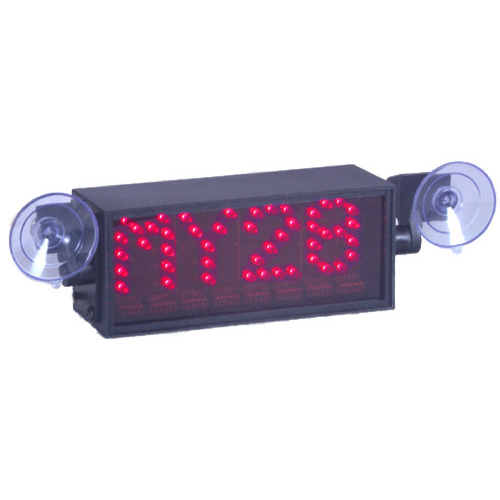
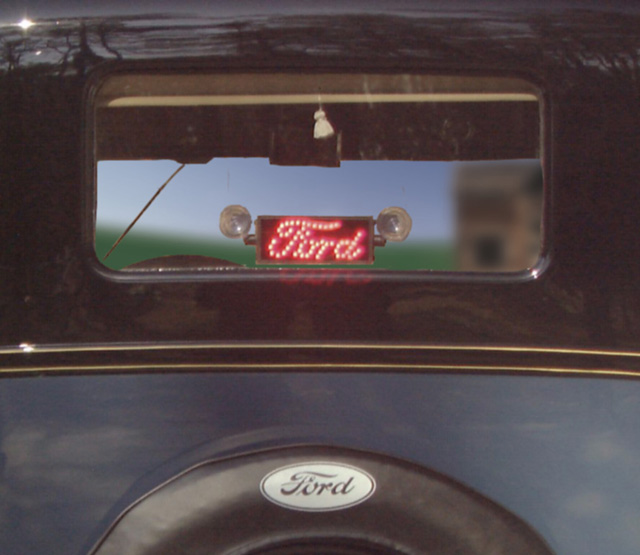
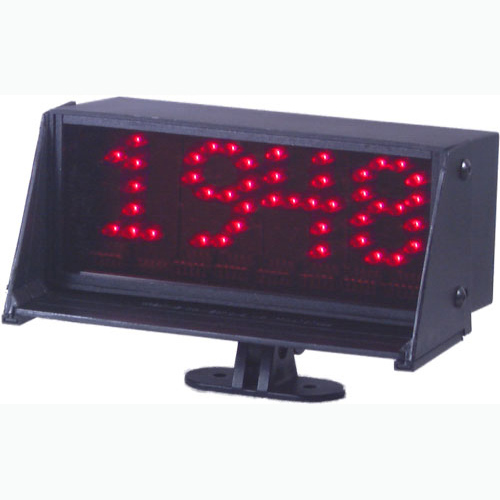
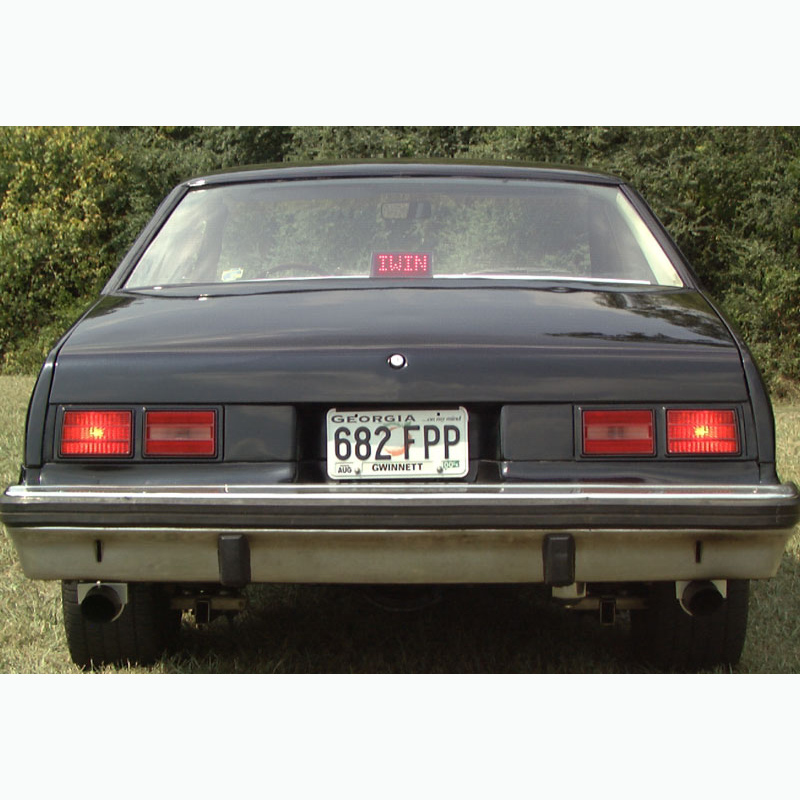
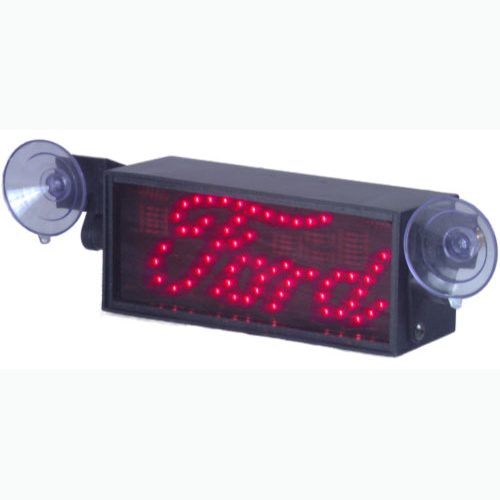
Lites turn signal kit was selected because they have no wiring change
requirements, bright LED units, long-lasting bulb life, very low battery drain,
overall high quality, and suitability to creative adaptation and installing
myself.
Many old Buicks have triple or double-stile
bumpers, (including most 1931's). But mine, having been manufactured late in
the production year, has 1932-style single-stile bumpers. This differs
from the double ones found on the Model A Ford, for which the
Logo Lites kit was designed.
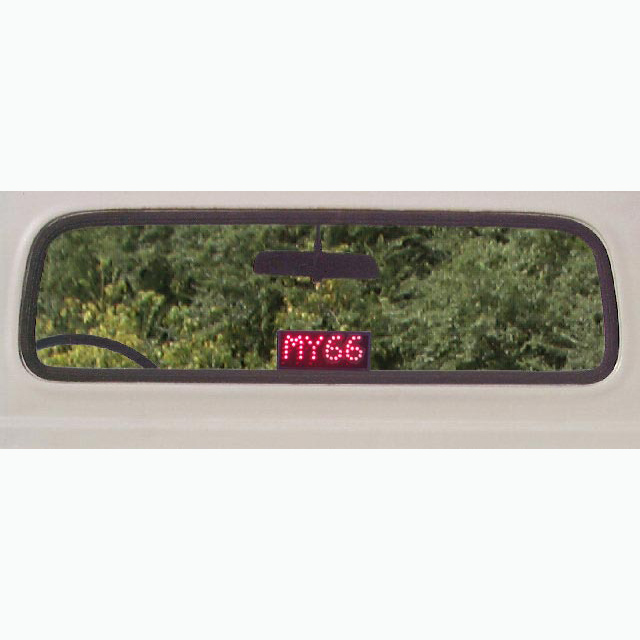
At a swap meet I was able to locate a pair of
tail light bodies appropriate to the appearance and year of my car. Their
dimensions permitted installing the Logo Lites
turn-signal units inside (see Rear View Closeup). The units just fit
inside and, with electrical tape wrapped around the circumference of the base,
remained snugly in place when the lens was installed.
For the rear turn signals, the stainless steel
mounting plate provided in the Logo Lites kit
was removed and a substitute metal strip the same size as the unit's base was
made for the LED light strip. I used aluminum flashing which I had in my
workshop and which was a satisfactory conductor and could easily be shaped with
tin snips for electrically connecting the two machine screws on the back of the
base. An insulated ground wire was then attached to one of the machine screws
and, together with the unit's power wire, led out the wire hole of the light
body. Mounting brackets were made out of flat steel for attaching to the rear
bumper bracket bolts, and painted gloss black.. The ground wire of each unit
was then attached to one of the bolts that attached the light body to this
mounting bracket, making sure of good contact, and utilizing the frame of the
car as the ground. Wires under the car were run inside black asphalt fabric
loom.
With some creativity in making the interior mounting plates
or brackets, the Logo Lite units can be installed inside a variety of light
bodies (housings). The bright LED display of a Logo
Lites unit is not significantly dimmed by the amber or red lens of the
host light fixture, and the amber plastic cover provided in the kit can be left
on or removed, as desired.
 Front T Bracket |
 Front T Bracket With Bend |
I am currently in the process of searching for a pair of
(non-sealed beam) small fog lights or other appropriate lights with amber
lenses for a similar appropriate permanent installation of the front turn
signals. Meanwhile, until they are found, I have installed Logo Lite units just
below the front bumper. I mounted them similarly to the way they mount on a
Model A, but I did have to make some "T" brackets out of stiff sheet aluminum
and mount them on the front bumper mounting-bracket bolts. The wires of these
units were also run inside black asphalt fabric loom under the car to the
firewall.
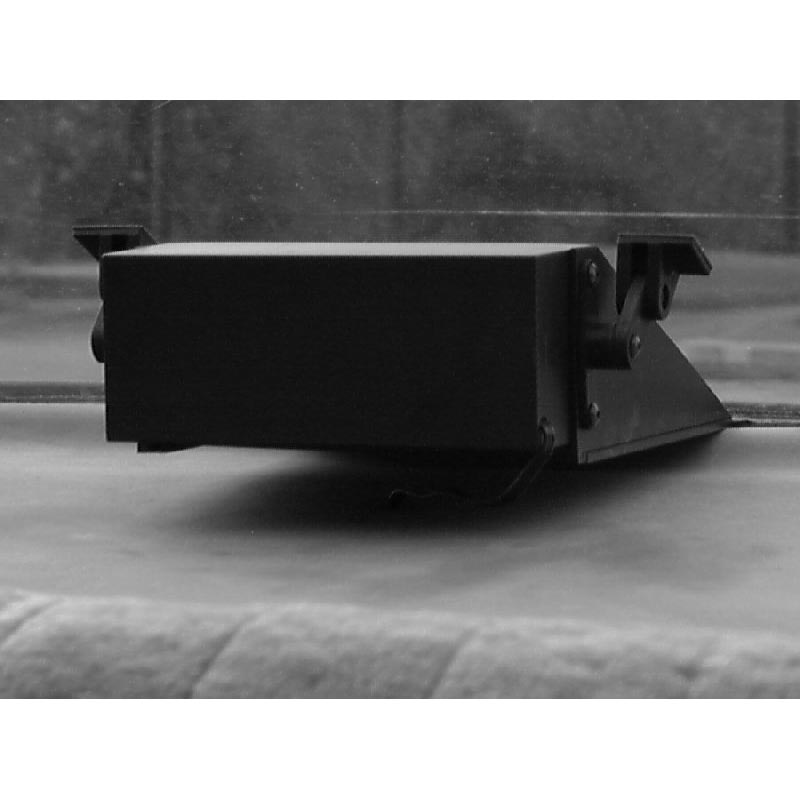
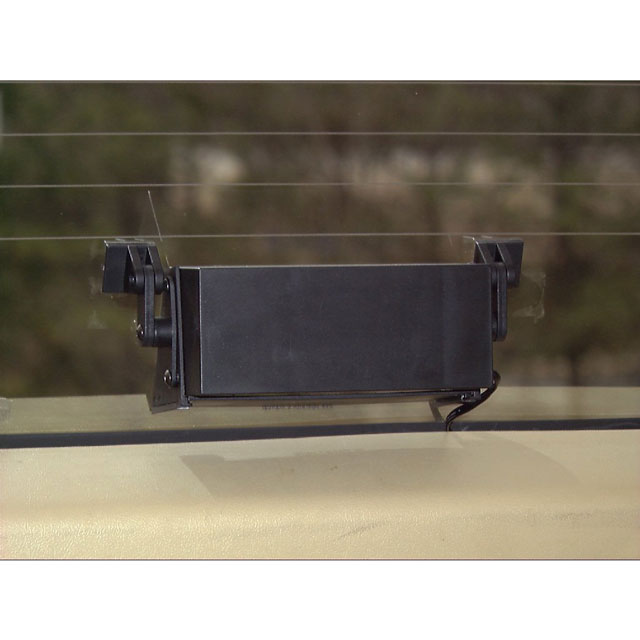
The large magnet on the controller is riveted to the back of
the box for mounting under the dashboard on the gas tank of a Model A Ford.
However, my '31 Buick's gas tank is in the rear, so that the magnet's location
only permits mounting the box on the front side of my car's dashboard in full
view, which I did not want. While the box is attractive in itself, and the
magnet does allow it to be removed, I wanted a more permanent installation,
with just the toggle switch and LED's to be in view below the bottom of the
dashboard, thus not detracting from the car's original appearance.
 Plywood Square |
 Metal Plate |
My solution was to install the controller on the back of the
dashboard between the steering column and driver's side door. The bottom of my
Buick's dashboard turns under towards the firewall, forming a small lip of
somewhat less than one inch. To fit the control box into this location, I
epoxied four ½" rare earth magnets, one at each corner, onto the face of
a 4" X 4" square of ½" plywood---for attaching to the back of the
dashboard (dimensions can vary to suit the particular vehicle). On the other
side of this plywood square, I screwed on a 4" X 4" metal plate (cut from an
electrical junction box cover from the local hardware store), having first
hack-sawed off both corners of one side of the metal plate at an angle and
drilling two new mounting holes (since I had just cut off the old ones) for
screwing to the plywood (Metal Plate on Plywood Square). This permitted part of
the plate to project below the plywood square and thus below the dashboard,
thereby providing an extended base for mounting the controller box with
comfortable access to the controls when the box is installed (Mounted
Controller photo). The part of the altered metal plate that projects below the
dashboard was painted black so that it would not be seen. The top two-thirds of
the stainless steel controller box face was then thoroughly roughed up with
sandpaper and using "J B Weld" three ½" rare earth magnets were epoxied
on (Controller Box Magnets). After allowing 24 hours for curing (clamps are not
necessary), I attached the front of the controller to the back of the metal
plate and let the magnets hold the two solidly together (Controller Box on
Metal Plate). Next, I attached the whole thing to the back of the dashboard
using the magnets. The large magnet riveted to the controller box is not used.
The installation looks very professional, is convenient to use, and does not
detract from the original appearance of the car's interior. Additionally, it
can simply be detached and moved totally out of sight, if desired. As a side
note, the extra toggle switch seen in Controller photo controls a bulb in the
bottom of each of the rear turn signal light fixtures which is an unrelated
bonus in the particular light units I found, in the form of extra tail lights
which can be switched on or off!
 Metal Plate on Plywood Square |
 Controller Box Magnets |
 Controller Box on Metal Plate |
 Mounted
Controller |
The chassis ground wire can be conveniently attached to the
steering column bracket or to the dashboard support bracket. The power wire can
be connected to the positive terminal of the ammeter, which is conveniently
close by in my car. The rest of the clear instructions provided in the
Logo Lites kit are easily adapted to the
Buick.
While the dimensions will vary, and the methodology
undoubtedly need to be adapted with each particular vehicle, it is hoped that
my experience with a '31 Buick may be of some value to other antique car owners
who are wrestling with the need for turn signals without changing. their car's
original wiring or appearance.
Father Mike Herrick BCA Green Bay, Wisconsin
Please send comments on this page to our
Webmaster "Logo Lites" and the Logo Lites logo are a registered
trademarks of Creative Connections, Inc. LogoLites.com is a trademark of
Creative Connections, Inc. Copyright 1998-2008,
Creative Connections, Inc. |